allto-1 · Robinhood Chain
Autonomous trading, with a ceiling.
Abstractallto is a trading agent that reads every venue it can route to, sizes each position against the limits you set, and settles on Robinhood Chain. It runs on a session key that can place orders and nothing else. Your keys stay in your wallet.
$128,940.22 ▲ 18.42%
- RHC-USDLONG+3.42%
- ETH-USDLONG+1.18%
- MOON/ETHSHORT−0.64%
risk 5/5 clear · routed 3 venues · filled 4,200 @ 1.0042
Simulated feed. Positions are illustrative.
- Trades executed
- 1.84M
- Median decision
- 42ms
- Uptime · 90d
- 99.98%
- Custody risk
- None
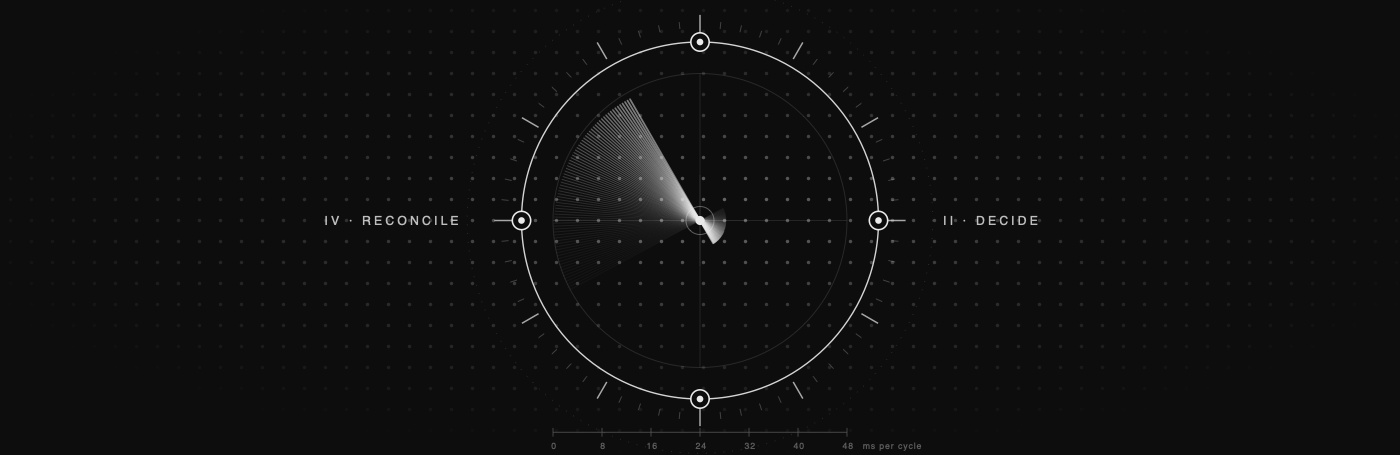
One pass, four stages.
Every second, on every market it can reach, allto runs the same pass: read the book, score the edge, check the limits, reconcile the fill. It is a decision loop, not a trade schedule.
- 1.1
Observe
Order books, funding, pool depth and oracle deltas are read from every venue the chain can route to, then normalised into one book with each source's age attached.
- 1.2
Decide
Each opportunity is scored on expected edge after fees, slippage and borrow cost, netted against correlation to what the book already holds. Below the threshold, nothing is sent.
- 1.3
Execute
The risk kernel runs before the order is signed. On a pass, allto routes it, waits for the receipt, and reconciles the fill against the estimate that justified the trade.

Six systems, one signing path.
Each part below can refuse a trade without asking the others. That is the whole design: the strategy proposes, the systems dispose.
Table 1. Engine systems
| System | Function |
|---|---|
| Signal mesh | Venue adapters feed one normalised book, each reading stamped with its age. A source that goes stale is dropped before it can move a price. |
| Risk kernel | Five limits, evaluated in the signing path: per-trade cap, daily loss, drawdown, venue exposure and correlation. A breach returns a veto naming the gate that fired. |
| Decision ledger | Every pass is appended as a record carrying the snapshot, the score, any veto and the resulting order, chained by hash. A tampered record breaks the chain at that point. |
| Execution router | Splits an order across venues when one book is too thin to fill it, and abandons the order if the expected fill drifts past the edge that justified it. |
| Reconcile | The fill is compared against the estimate the decision was made on. Drift beyond tolerance is written to the ledger rather than smoothed over. |
| Replay | The same ledger, run back through the engine, reproduces the same decisions. That is what makes a bad day auditable instead of arguable. |
Backtest, then paper, then live.
Three gates, in order. The figures below are from the paper run: live venue data, simulated fills, no capital at risk. They are not a forecast.
Table 2. Paper run · 90 days
| Metric | Value | Basis |
|---|---|---|
| Return · 30d | 18.42% | simulated fills, net of modelled fees |
| Max drawdown | 4.1% | kill switch at 6.0% |
| Sharpe | 2.31 | paper run, not annualised |
| Round trips | 1,942 | 63% closed in profit |
Daily allto equity, 30 days. Illustrative data. Hover to read each candle.
Limits are code, not a warning.
Every limit below is evaluated in the signing path, before a transaction is built. There is no path around them and no prompt that argues with them.
Table 3. Limits enforced before signing
| Per-trade cap | No single order exceeds the notional you set, long or short. |
|---|---|
| Daily loss stop | At your daily loss limit the agent flattens and stops until the next session. |
| Drawdown kill switch | Breaching the drawdown limit revokes the session key onchain. Restarting is a manual act. |
| Venue exposure | Equity held on any one venue is capped, so one venue's failure cannot take the book. |
| Correlation | New exposure that duplicates what the book already holds is refused, however good the edge looks. |
| Session key scope | The key places orders. It cannot withdraw, approve or transfer. |
Table 4. Utilisation · current session
| Limit | Used / cap | Load |
|---|---|---|
| Position size | $4,200 / $5,000 | |
| Daily loss | $310 / $1,000 | |
| Drawdown | 4.1% / 6.0% | |
| Venue exposure | 22% / 40% |
Settled on Robinhood Chain.
Robinhood Chain is the home venue: orders, receipts and proofs settle there. The router reaches other venues only when the edge survives the bridge.
- 5.1
Confirmation, not hope
A fill is confirmed before the edge decays, so the router never has to guess whether an order landed. Unconfirmed orders are reconciled against the receipt, not assumed.
- 5.2
Cost that leaves the edge intact
Cheap execution lets the strategy take smaller, more frequent trades. At high gas it would have to sit out small edges it can otherwise take.
- 5.3
Auditable by default
The risk kernel interface and the ledger format are public, and every decision carries a hash. Verify a day of trading without trusting our database.
Routes toRobinhood Chain · Uniswap v4 · Curve · Aerodrome · Hyperliquid · Drift · Orderly · Chainlink · Pyth
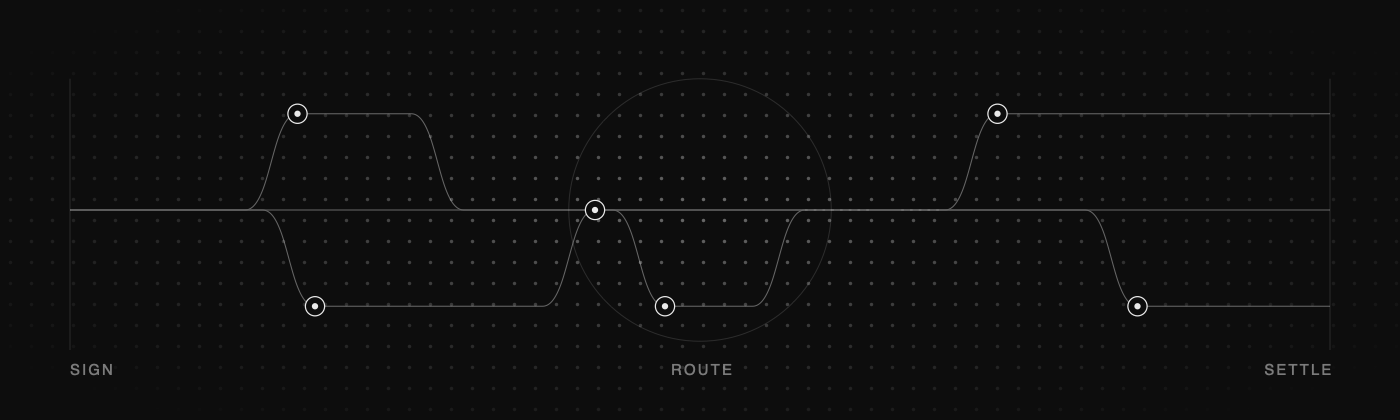
The token is the mandate.
$ALLTO is the asset the agent is sized against on Robinhood Chain. There is no subscription, no seat licence and no tier: holding the token is the only access there is, and trading revenue accrues to the treasury that holds it.
Table 5. Token mechanics
| Backs the agent | Treasury value sets what the agent can size against. Revenue accrues to the token, not to an invoice. |
|---|---|
| One token, one mandate | Allocation is weighted by holdings, so a larger position runs a larger share of the book. |
| Fee switch | Trading revenue buys and burns. Supply is public, and every burn is a transaction anyone can read. |
Table 6. $ALLTO parameters
| Token | $ALLTO |
|---|---|
| Chain | Robinhood Chain |
| Total supply | 1,000,000,000 |
| Agent backing | 100% of revenue |
| Fee switch | Buyback & burn |
| Burned to date | 41,288,000 |
Questions, answered plainly.
Does allto ever hold my funds?
No. It trades from your wallet through a scoped session key that can place orders and nothing else: no withdrawals, no approvals, no transfers. Revoke the key from the app or from the chain at any time and the agent stops on its next pass.
Which chain does it trade on?
Robinhood Chain, where orders and receipts settle. The router will reach a venue on another chain only when the edge survives the bridge cost, and each such route is recorded in the ledger.
How is the risk ceiling enforced?
In the signing path, before a transaction is built. Five checks run on every order: per-trade notional, daily loss, drawdown, venue exposure and correlation. A failure returns a veto naming the gate that fired. A drawdown breach revokes the key rather than pausing the loop.
Can I see why it made a trade?
Every pass is a ledger record: the snapshot it read, the score it computed, any veto it hit, the order it signed and the fill it got back, each chained by hash. Replay any day and the reasoning is there beside the transaction hash.
What happens on a bad day?
The daily loss stop flattens open positions and halts the agent until the next session. If drawdown reaches the kill threshold, the session key is revoked onchain and restarting is a deliberate, manual act. Trading carries risk of loss; allto reduces the size of a bad day, it does not remove it.
Why a token instead of a subscription?
Because the agent is backed, not rented. $ALLTO is what the book is sized against and what revenue accrues to, so every holder is exposed to the same treasury the agent trades. There is no monthly fee and nothing to cancel: sell the token and the mandate ends with it.
$ allto init --paper
Run it on paper first.
Connect a wallet, set your limits, and watch the agent trade against live venue data with simulated fills. Nothing is signed until you switch it on. No card, no subscription.